Live in Costa del Este / Panama
Panama: people, regions and places to explore
Living in Costa del Este also means having Panama to discover: a history of encounters, neighborhoods with different rhythms, islands, highland towns and the Canal. Start with its people, then choose where to go next.
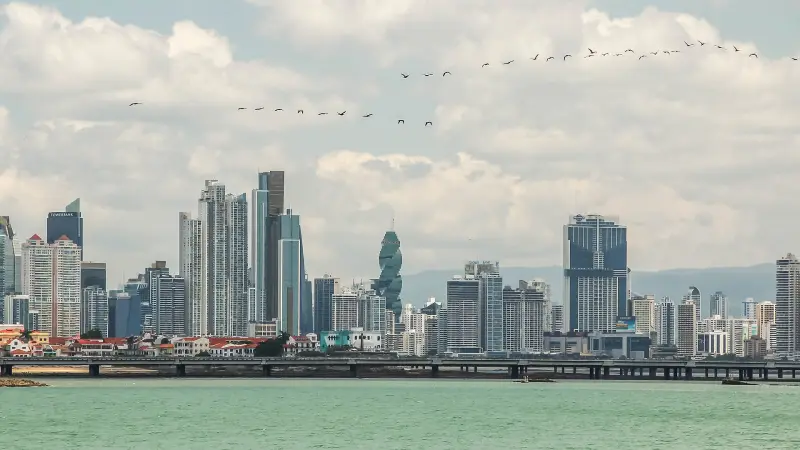
Panama at a glance
INEC projects 4,645,375 residents as of 1 July 2026. That is a population estimate; the 2023 census counted 4,064,780 residents.
Spanish is the official language. The US dollar is legal tender, and balboa coins have the same value: B/.1 = US$1.
A bridge between the Americas, Panama has 10 provinces and 6 Indigenous comarcas. Its regions range from the Caribbean of Bocas del Toro, Colón and Guna Yala to the Chiriquí highlands, Azuero’s towns and Pacific beaches. The “Pacific Riviera” is a tourism name for a stretch of beaches west of the capital.
Panama in expat and retirement rankings
Panama ranks #1 in InterNations' Expat Insider 2026 survey.
Panama placed first among 31 destinations in InterNations' 2026 survey of expat satisfaction, its third consecutive first-place finish. The result concerns Panama as a country; choosing a neighborhood still depends on your budget, school and daily routine.
First place in 2024, 2025, 2026.
International Living ranked Panama #2 in its 2026 Annual Global Retirement Index, after ranking it #1 in 2025.
InterNations measures respondents’ satisfaction; International Living draws on its correspondents and experts.
Sources reviewed: 18 Oct 2026.
The people
In the 2023 census, 31.7% of residents identified as Afro-descendant and 17.2% as Indigenous. These identities can overlap: a person may identify as both.
The seven Indigenous peoples are Guna, Ngäbe, Buglé, Emberá, Wounaan, Naso Tjër Di and Bribri. The six comarcas are Guna Yala, Emberá-Wounaan, Ngäbe-Buglé, Madungandí, Wargandí and Naso Tjër Di; the first three have provincial status.
The census recorded 249,476 foreign-born residents, 6.1% of the population. The leading birthplaces were Colombia, Venezuela, Nicaragua and China; others included the Dominican Republic, the United States, Costa Rica, India and Spain.
Where the mix comes from
The isthmus route predates the Spanish and brought together Indigenous peoples, enslaved Africans and Europeans. Panama City was founded on 15 August 1519 at Panamá Viejo, destroyed in 1671 and refounded in 1673 at today’s Casco Antiguo.
Afro-Caribbean workers arrived for the 1850–1855 railroad, the French canal project in the 1880s and US construction in 1904–1914. Chinese workers arrived aboard the Sea Witch on 30 March 1854 to work on the railroad; Chinese Ethnicity Day is commemorated each 30 March.
Sephardic families from Curaçao, St Thomas, Jamaica and other islands founded Kol Shearith Israel on 14 May 1876. Colón has long-established Arab and Lebanese communities. The 2023 census counted 3,719 residents born in India.
The Torrijos–Carter treaties were signed on 7 September 1977. The Canal Zone ended on 1 October 1979, and the Canal passed to Panamanian control on 31 December 1999.
Other dates that help tell this history are 30 May, Black Ethnicity Day—a civic commemoration, not a public holiday; 9 August, National Indigenous Peoples Day; and 25 February, the commemoration of the Dule Revolution.
How Panama talks
Spanish is the official language. The 2023 census did not ask which language people speak, so we made an estimate: each resident gets the language of their Indigenous people or, if born abroad, the main language of their country of birth; everyone else born in Panama gets Spanish. This is our calculation from census data, not an official figure.
Belonging to a people doesn't mean speaking its language, so the Indigenous rows are a ceiling. And the table can't see people born in Panama who grew up with another language at home, such as English or Chinese. Even so, the picture is clear: about 8 in 10 residents would have Spanish as their first language.
| Likely first language | Residents (approx.) | Share |
|---|---|---|
| Spanish | 3,324,000 | 81.8% |
| Ngäbere (Ngäbe people) | 445,000 | 10.9% |
| Guna (Guna people) | 112,000 | 2.8% |
| Emberá | 52,000 | 1.3% |
| Buglere (Buglé and Bokota peoples) | 24,000 | 0.6% |
| Chinese (born in China, Taiwan and Hong Kong) | 15,000 | 0.4% |
| English (born in the US, Canada, the English-speaking Caribbean, the UK and elsewhere) | 12,000 | 0.3% |
| Wounmeu (Wounaan people) | 11,000 | 0.3% |
| Naso Tjerdi (Naso and Teribe peoples) | 6,900 | 0.2% |
| Indian languages (born in India) | 3,700 | <0.1% |
| Portuguese (Brazil, Portugal and elsewhere) | 2,800 | <0.1% |
| Bribri | 800 | <0.1% |
| Other or undeclared Indigenous people | 46,000 | 1.1% |
| Other languages (French, Italian, German, Arabic, Hebrew and more) | 9,400 | 0.2% |
Phrases to get you started
Panamanian Spanish has its own flavor: it flips syllables (xopá, mopri), borrows from English (fren, priti) and has one word for everything (vaina).
- ¿Qué xopá?
- Hi, what's up? It's «¿qué pasó?» with the syllables flipped.
- 'Tá bien
- ‘It's fine.’ It also works as a goodbye, and the tone changes what it means.
- ¡Ofi!
- Agreed, OK.
- Fren
- Friend, from the English word.
- Mopri
- Buddy: «primo» (cousin) flipped.
- Pelao
- Kid.
- ¡Chuleta!
- Surprise or admiration, like ‘wow!’
- ¡Ayala!
- Surprise or annoyance.
- Chantin
- Home.
- Parquear
- To hang out. A ‘parkin'’ is a party with friends.
- Una pinta, una fría
- A beer.
- Chen chen
- Money.
- Priti
- Nice, cool.
- Vaina
- Catch-all word for any thing.
- Juega vivo
- Someone who thinks they're smarter than everyone and angles for an advantage.
- Ñapa
- A little extra thrown in when you buy.
- Camarón
- A side gig.
- Diablo rojo
- A brightly painted bus that started life as a US school bus.
Connected to the world
Tocumen handled 20,981,855 passengers in 2025, almost 21 million; 15,233,812 were transfer passengers. Its network had about 90 direct destinations in August 2026. Copa Holdings’ 2025 annual report lists a network of 84 destinations in 32 countries.
In October 2026, nonstop flights connect Panama with Madrid on Iberia and Air Europa, Amsterdam on KLM, Paris on Air France and Istanbul on Turkish Airlines.
For adult visitors, Migración requires a passport valid for at least three months, evidence of funds of at least B/.500, an onward reservation and a visa where required for your nationality. Its official ordinary-passport table lists visa requirements.
The Canal
The Canal opened on 15 August 1914. Panama took full control at noon on 31 December 1999. The expansion opened on 26 June 2016 with the Neopanamax locks at Agua Clara and Cocolí; the original locks still operate.
ACP recorded 13,404 transits in fiscal 2025, October 2024 through September 2025, in its preliminary figures. See the original locks from the terraces at Miraflores on the Pacific side, or the Neopanamax locks and Gatún Lake from Agua Clara near Colón. Miraflores also has an IMAX cinema.
Nature and more
Audubon Panamá records 1,030 bird species through October 2025. Smithsonian research in the country began with its 1910 Biological Survey; the institute took the name STRI in 1966.
Panama has five UNESCO World Heritage properties. They include Coiba, Darién, the Portobelo–San Lorenzo fortifications and the Colonial Transisthmian Route, which has included Panamá Viejo and Casco Antiguo since 2025.
Panama City has been a UNESCO Creative City of Gastronomy since 2017. Try sancocho, hojaldres and carimañolas; on the Amador Causeway, the Biomuseo is a work by Frank Gehry.
The only recorded tropical-cyclone landfall in Panama was Martha, as a tropical storm, in Veraguas on 24 November 1969. Cyclones can also affect the country without making landfall: Otto caused eight deaths in Panama in 2016.
Other areas to consider living in
City, beach or highlands? These areas offer different starting points for your search.
In Panama City
San Francisco
A corregimiento with 61,290 residents in the 2023 census. It includes Punta Paitilla, Punta Pacífica, Coco del Mar and Altos del Golf; Parque Omar is its main park.
Albrook
Former Canal Zone land in Ancón, with low-density single-family housing. The Line 1 station is beside the Gran Terminal; the area also has Marcos A. Gelabert domestic airport and Albrook Mall.
Clayton
The former Fort Clayton was handed over to Panama on 30 November 1999. It is an area of low-density housing in Ancón.
Ciudad del Saber / City of Knowledge
The project began in 1995 and received 120 hectares of Fort Clayton in 1998. Its forest reserve of more than 20 hectares connects to Camino de Cruces; the campus terminal has a connection to Albrook.
Punta Pacífica / Punta Paitilla
Coastal neighborhoods of San Francisco, with towers and houses.
Obarrio / Marbella / Bella Vista
Obarrio, Marbella and El Cangrejo are areas within Bella Vista corregimiento. Bella Vista had 33,710 residents across 4.6 km² in the 2023 census.
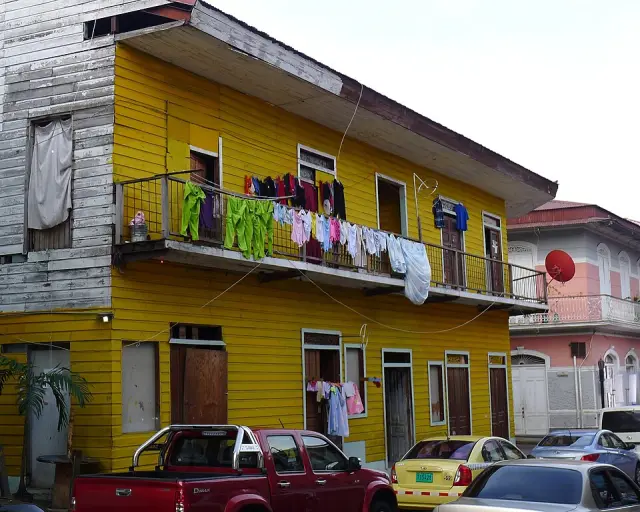
Casco Viejo
The walkable historic quarter dating from 1673, part of a World Heritage property. San Felipe corregimiento had 1,258 residents in the 2023 census.
Santa María
A private golf community in Juan Díaz, next to Costa del Este, with a Luxury Collection hotel. Its Nicklaus Design course has 18 holes.
Condado del Rey
It began with gated developments, later adding towers and shopping centers. The 2021 municipal plan flags road access as a consideration.
Altos del Golf
A residential area of San Francisco beside Parque Omar.
Outside the city
Panamá Pacífico
The former Howard Air Force Base, made a special economic area under Law 41 of 2004. In Veracruz, Arraiján, it brings together homes, businesses, schools, shops and an airport.
Coronado
A beach town in Chame, Panamá Oeste, within the Pacific Riviera. It has black sand, hotels, shops and restaurants.
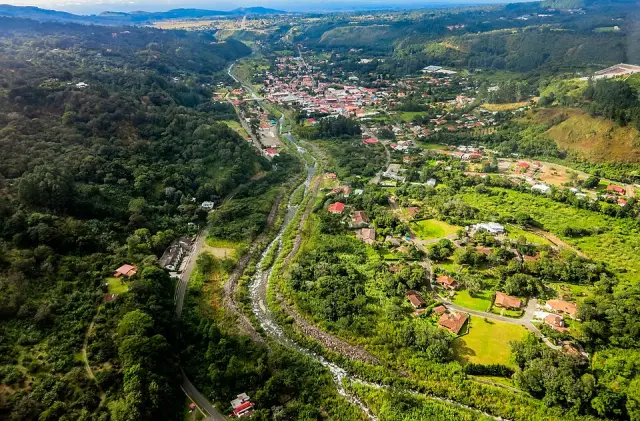
Boquete
A Chiriquí highland town with coffee farms, trails and waterfalls. Visit Panamá estimates about 50 minutes by car from David.
Bocas del Toro
A Caribbean archipelago: Bocas Town on Isla Colón is the provincial capital, with Carenero and Bastimentos nearby. The flight from Albrook takes about an hour.
El Valle de Antón
A Coclé town on the floor of an inactive volcanic caldera. It has a market and hikes such as India Dormida; buses run from Albrook.
David
Chiriquí’s capital, with air connections through Enrique Malek airport. Air Panama lists a flight of about 45 minutes from Albrook.
Volcán
The seat of Tierras Altas district, created in 2013, in the highlands beside Barú.
Pedasí
A Los Santos town used as a base for beaches and trips to Isla Iguana. Boats to the island leave from Playa El Arenal.
Las Tablas
The capital of Los Santos, known for Carnival and polleras. The Mil Polleras parade takes place on the second Saturday of January.
For walkable family life by the bay, Costa del Este is our pick. If you are looking for a house, start with our Costa Azul guide.
7 Panama City neighborhoods for families →
10 Reasons to Live in Costa del Este, Panama — and the Tradeoffs → · Costa Azul →
Places to explore
Times are estimates from the linked sources, not routes calculated from Town Center. Unless another starting point is given, they start in Panama City.
Caribbean
Playa Escondida
Private resort community
A private resort and residential community in María Chiquita, Portobelo district, on Colón’s Caribbean coast.
Book access with the resort; this is not listed as a public beach.
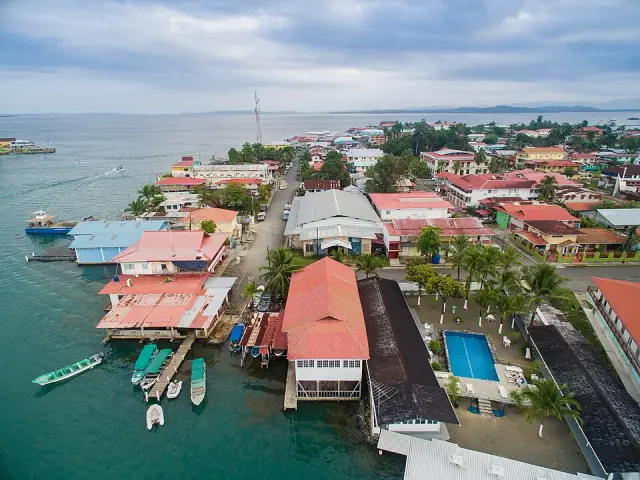
Bocas del Toro
A Caribbean archipelago for surf and reefs, with Isla Colón, Carenero and Bastimentos.
By air: about 1 hour from Albrook.
San Blas / Guna Yala
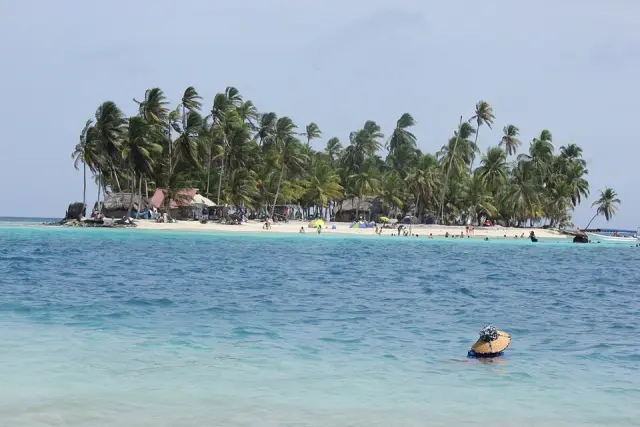
Islands administered by the Guna Congress. Bring a passport; community charges cover entry, boat travel and stays.
About 2½–3 hours by certified 4×4 to Cartí, then a boat.
Portobelo
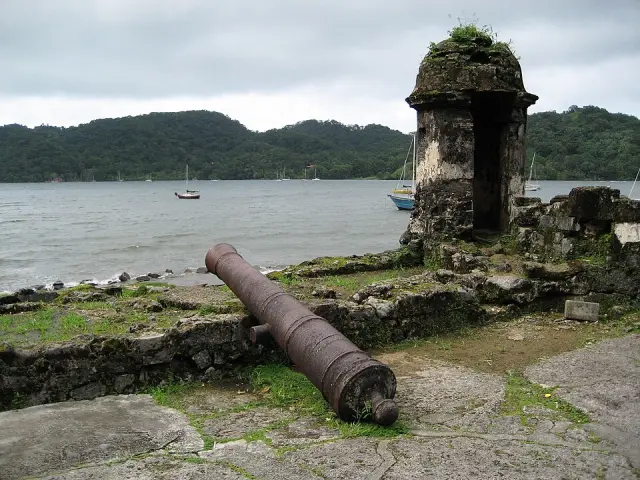
UNESCO fortifications, Congo culture and the Black Christ of San Felipe church, celebrated on 21 October.
By car: about 1½ hours from Panama City.
Isla Grande
An island without roads, with reefs and a lighthouse on the Caribbean coast.
About 2½ hours by road to La Guaira, then 15–20 minutes by boat.
Pacific
Coronado
A black-sand beach and town with hotels, shops and restaurants on the Pacific Riviera.
By car: about 80–90 minutes from the capital.
Buenaventura
Private resort community
A private resort community in Río Hato, Coclé. Buenaventura Golf & Beach Resort is part of Autograph Collection and has an 18-hole Nicklaus Design course.
Arrange your visit or stay with the resort; this is not listed as a public beach.
Pedasí / Isla Iguana
A Los Santos town and departure point for Isla Iguana Wildlife Refuge.
About 4½–6½ hours by car from Tocumen; reach Isla Iguana by boat from El Arenal.
Playa Venao
A beach for surfing in the Pedasí area.
By car: about 5 hours from the capital, or about 30 minutes from Pedasí.
Contadora / Islas de las Perlas
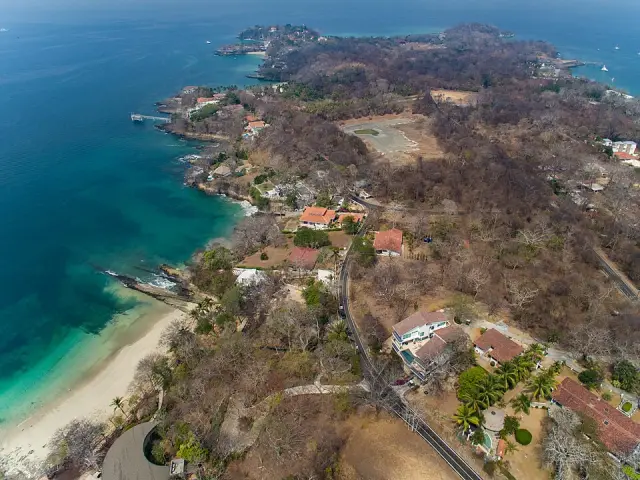
An island from which to explore the Pearl Islands in the Pacific.
By ferry: 1 hour 30 minutes from Flamenco Marina, Amador, according to the operator.
Taboga
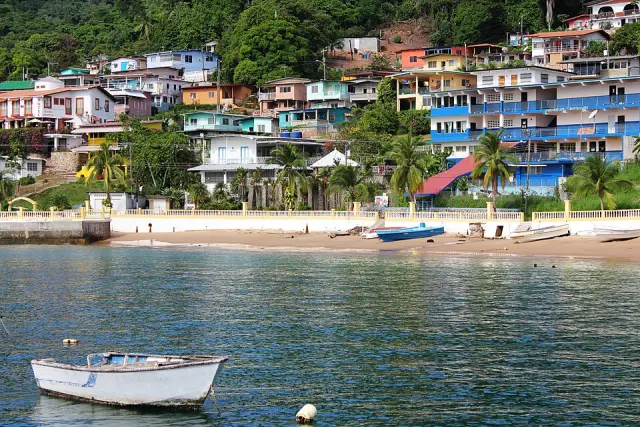
The “Island of Flowers,” a boat trip from the city.
By ferry: about 30 minutes from Isla Flamenco.
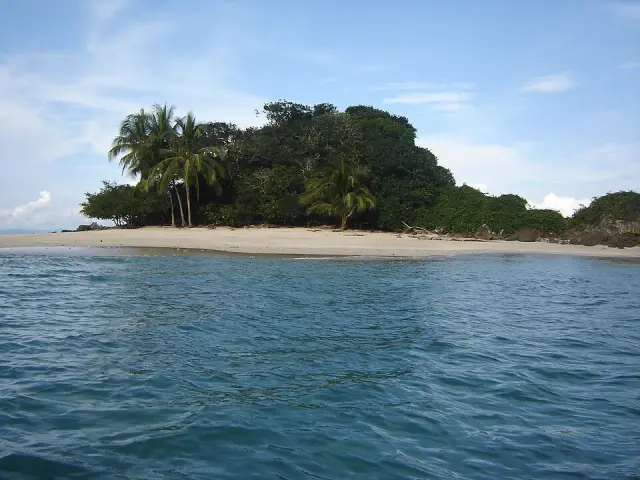
Santa Catalina / Coiba
A Veraguas surf village and boat base for Coiba National Park, a World Heritage property since 2005.
About 6 hours by road to Santa Catalina; continue by boat to Coiba.
Highlands
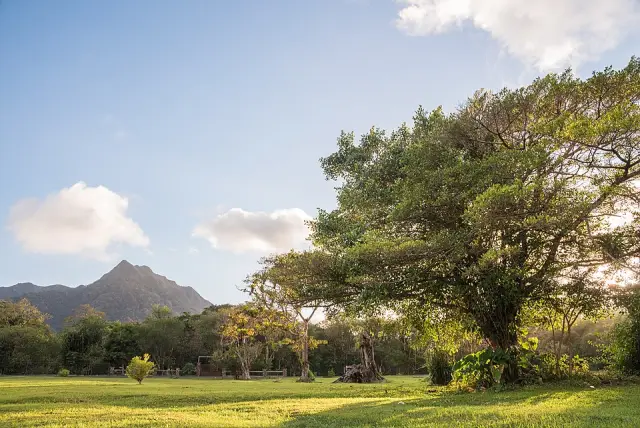
El Valle de Antón
A town inside an inactive volcanic caldera, with a market and hikes such as India Dormida.
By car: about 2½–2¾ hours via Las Uvas; buses also run from Albrook.
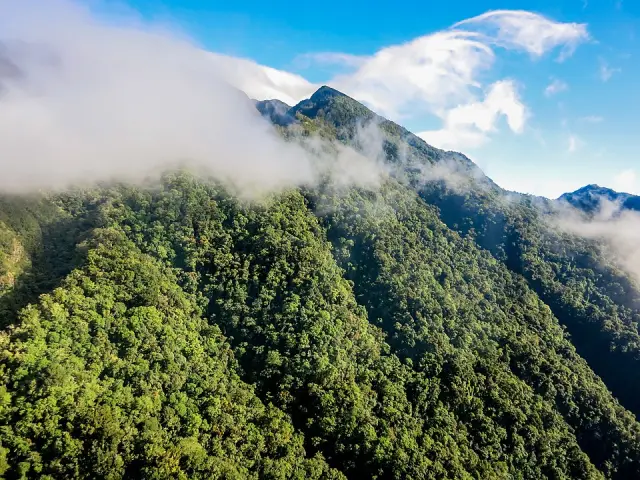
Boquete / Volcán Barú
Coffee, trails and waterfalls in Boquete. Barú reaches 3,474 m, the country’s highest point, with routes from Boquete and Volcán.
For Boquete: fly to David, then about 50 minutes by car.
Canal and nature near the city
Cerro Ancón
A 199 m hill with views of Casco and Balboa, a large flag, sloths and toucans. It has been a reserve since 2001.
A visit within Panama City.
Soberanía / Pipeline Road
A 19,500-hectare national park. Pipeline Road is a place to watch birds in this forest setting.
About 30 minutes from the city, according to Visit Panamá.
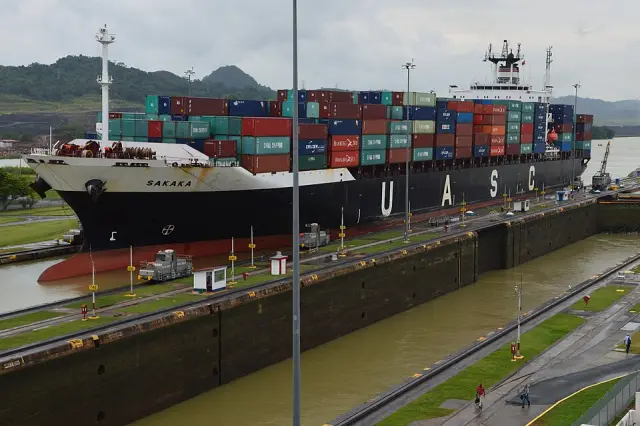
Miraflores
Terraces beside the original locks and an IMAX cinema at the Pacific-side visitor center.
By car: about 15 minutes from central Panama City, according to Visit Panamá.
Agua Clara
A visitor center near Colón overlooking the Neopanamax locks and Gatún Lake.
By car: about 1 hour from Panama City, according to Visit Panamá.
Gamboa
A canal-side town surrounded by Soberanía, and the Smithsonian’s base for Barro Colorado.
About 30 km from Panama City.
Chagres
A national park since 1984, protecting water for the Canal and the cities.
Visit Emberá communities by dugout canoe on Lake Alajuela.
Make a plan
- Compare places to live against your school, work and free-time routine.
- For a trip, separate road travel from the flight, ferry or boat leg and allow time for connections.
Questions
How many people live in Panama?
INEC projects 4,645,375 residents as of 1 July 2026. The 2023 census counted 4,064,780 residents: these are a projection and a census count from different years.
Which cultures come together in Panama?
Panama has seven Indigenous peoples. In the 2023 census, 31.7% identified as Afro-descendant and 17.2% as Indigenous; those identities can overlap. Foreign-born residents made up 6.1% of the population.
What languages are spoken in Panama?
Spanish is the official language. The 2023 census did not ask about language; by our estimate from its data, about 8 in 10 residents would have Spanish as their first language. Indigenous languages such as Ngäbere and Guna come next, and among people born abroad, Chinese and English.
How do you visit San Blas / Guna Yala?
Visit Panamá estimates about 2½–3 hours by certified 4×4 to Cartí, followed by a boat trip. Bring a passport and allow for community entry, boat and accommodation charges. The territory is administered by the Guna Congress.
Are Playa Escondida and Buenaventura public-access beaches?
This guide lists them as private resort communities, not public beaches. Playa Escondida is a residential and resort development in María Chiquita; Buenaventura is in Río Hato. Arrange access or a stay with each resort.
Sources (90)
- INEC: 2026 population projection
- INEC: population and identity, 2023 census
- ECLAC: overlapping identities
- MinGob: Indigenous peoples and comarcas
- Constitution: official language
- INEC: foreign-born residents
- UNESCO: Panamá Viejo and Casco Antiguo
- UNESCO: Colonial Transisthmian Route, 2025
- University of New Mexico: West Indian migration
- SERTV: Chinese heritage and 30 March
- Kol Shearith Israel: congregation history
- La Prensa: Arab community in Colón
- US State Department: treaties and Canal Zone
- Law 9 of 2000: Black Ethnicity Day
- National Assembly: commemorative dates
- INEC: provinces and comarcas
- UNESCO: Panama’s five World Heritage properties
- UNESCO: Portobelo and San Lorenzo
- Visit Panamá: Volcán Barú National Park
- Visit Panamá: Pacific Riviera
- UNESCO: Coiba
- UNESCO: Darién
- Tocumen: 2025 passengers
- Tocumen: 2026 direct destinations
- Copa Holdings: 2025 annual report
- Visit Panamá: flights from Europe
- Migración: entry requirements
- Migración: visas by nationality
- Air Panama: schedules
- ACP: Canal history
- ACP: Canal handover
- ACP: expanded Canal
- ACP: fiscal 2025 transits
- Canal: Miraflores Visitor Center
- Canal: Agua Clara Visitor Center
- Audubon Panamá: 2025 bird list
- NHC: Otto and storm history
- Banking Superintendency: dollar and balboa
- Smithsonian: STRI history
- Visit Panamá: culture and cuisine
- UNESCO: Panama City, gastronomy
- Biomuseo: the building
- INEC: population by corregimiento, 2023
- Municipality: San Francisco and its neighborhoods
- Municipality: Albrook, Clayton and coastal areas
- Metro: Line 1 and Albrook
- Air Panama: destinations and Albrook airport
- City of Knowledge: history
- City of Knowledge: the campus
- Bella Vista: its neighborhoods
- Visit Panamá: Casco Antiguo
- Santa María: community and hotel
- Santa María: golf course
- Panamá Pacífico Agency: history and legal framework
- La Estrella: homes and services in Panamá Pacífico
- Municipality: Condado del Rey
- Municipality: Altos del Golf
- La Estrella: Coronado
- Visit Panamá: Boquete
- Visit Panamá: Bocas del Toro
- Visit Panamá: El Valle de Antón
- INEC: David and Tierras Altas districts
- Visit Panamá: Pedasí and Tonosí
- Visit Panamá: Los Santos and Las Tablas
- Playa Escondida: private resort
- Visit Panamá: Buenaventura
- Visit Panamá: San Blas / Guna Yala
- Visit Panamá: Portobelo
- Visit Panamá: Isla Grande
- Ferry Las Perlas: schedules
- Visit Panamá: Taboga
- Visit Panamá: Santa Catalina
- Visit Panamá: Playa Venao
- La Estrella: Cerro Ancón
- MiAmbiente: Soberanía National Park
- Visit Panamá: visiting the Canal
- STRI: Gamboa
- Visit Panamá: Chagres National Park
- Visit Panamá: travel to Soberanía
- NHC: HURDAT2 historical record (Martha, 1969)
- INEC: Indigenous population by people, 2023 census
- UNFPA: Panama's census does not ask about language (2025)
- Día a Día: Panamanian slang (2019)
- Día a Día: ‘Qué xopá fren’ and Panamanian words (2018)
- InterNations: Expat Insider 2024
- InterNations: Expat Insider 2025
- InterNations: Expat Insider 2026
- InterNations: 2026 methodology
- International Living: 2026 index and method
- International Living: 2025 result
Consulted in October 2026. Confirm hours, availability and requirements directly before visiting.
Photos
- Panama City on the bay — Dr. Thomas Liptak · CC BY-SA 4.0
- Casco Viejo facade — yakovlev.alexey from Moscow, Russia · CC BY-SA 2.0
- Boquete from above — FranHogan · CC BY-SA 4.0
- Bocas del Toro — Dronepicr · CC BY 3.0
- Isla Perro, Guna Yala — Mónica J. Mora · CC BY-SA 3.0
- Portobelo fortifications — Jim Williams · CC BY-SA 3.0 igo
- Contadora Island — Dronepicr · CC BY 3.0
- Taboga waterfront — Ayaita · CC BY 3.0
- Island in Coiba — Seibert · CC BY-SA 4.0
- El Valle de Antón — Randy Navarro B. · CC BY-SA 4.0
- Barú volcano — FranHogan · CC BY-SA 4.0
- Miraflores locks — Ivo Kruusamägi · CC BY-SA 4.0


Resized WebP versions; framing is cropped to fit the screen. The sharing image is also cropped. The listed licenses are retained.